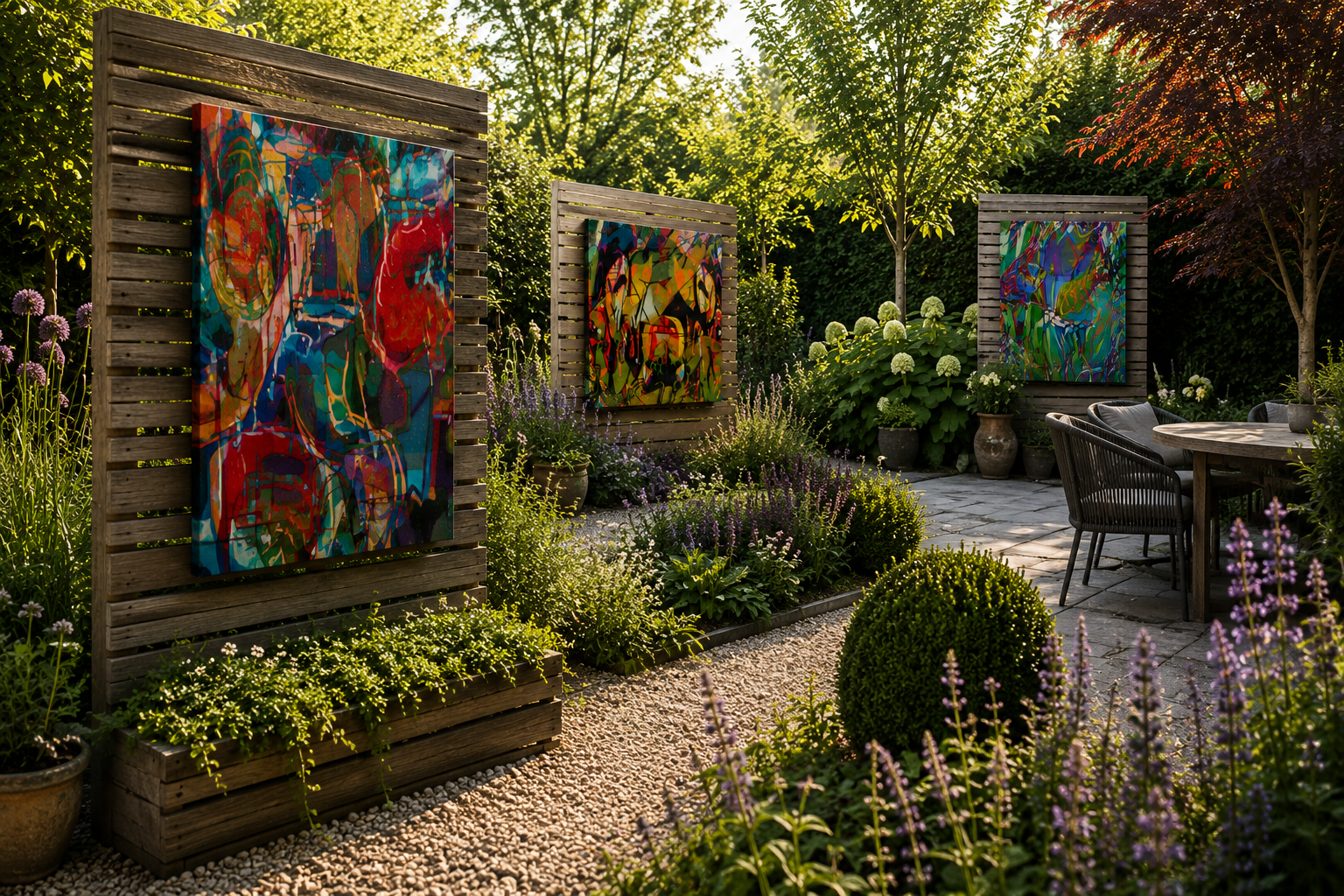
Art for Artless Spaces
Inspired by my own garden, Art for Artless Spaces explores how temporary and movable artwork placements can help bring visual personality into parts of the garden that might otherwise feel difficult to style or unsuitable for outdoor art.
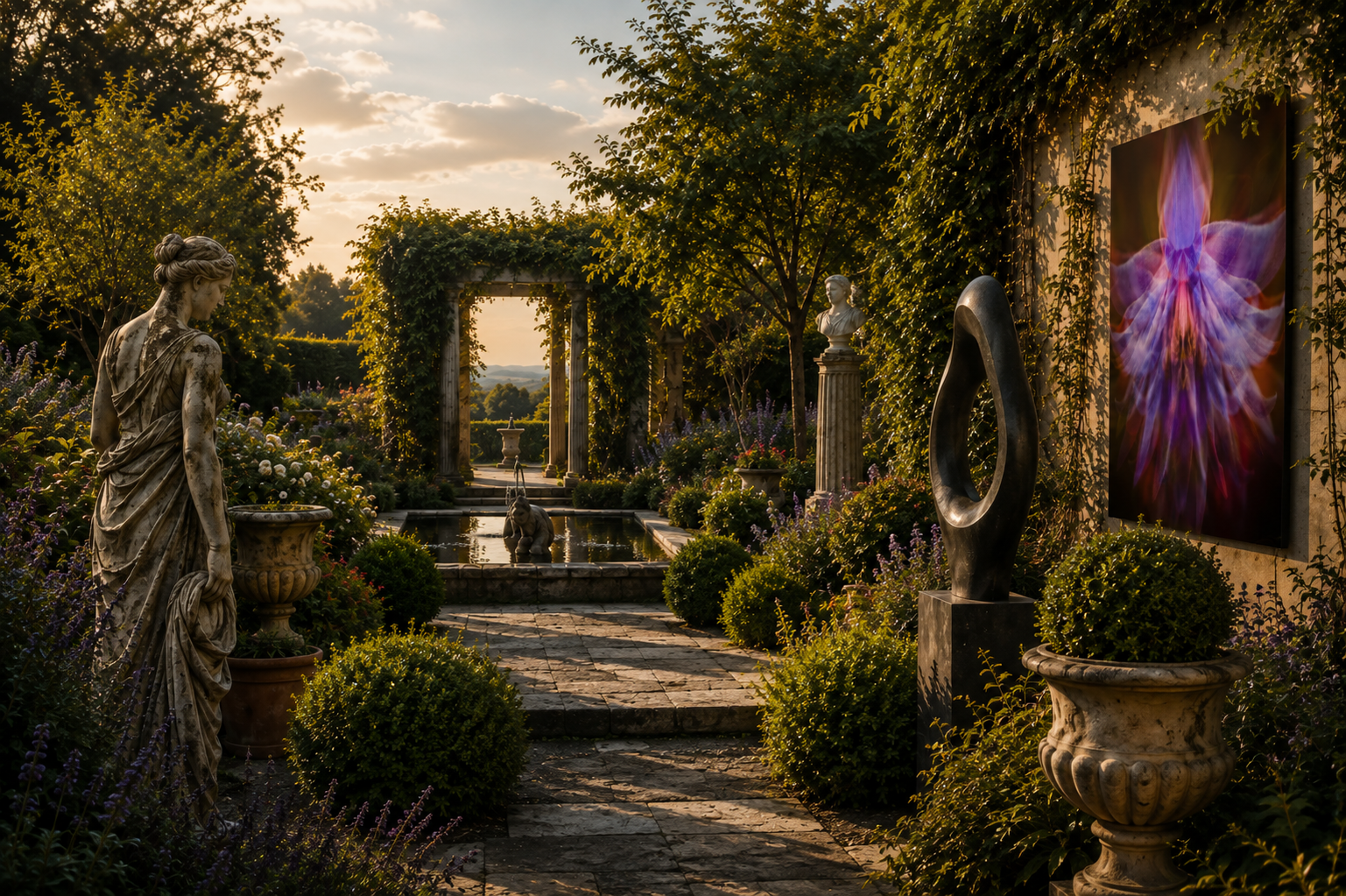
Why Art Has Always Belonged in Gardens
From ancient civilisations to contemporary outdoor spaces, art has long played a central role in shaping how gardens are experienced - a tradition that continues within modern garden design today.
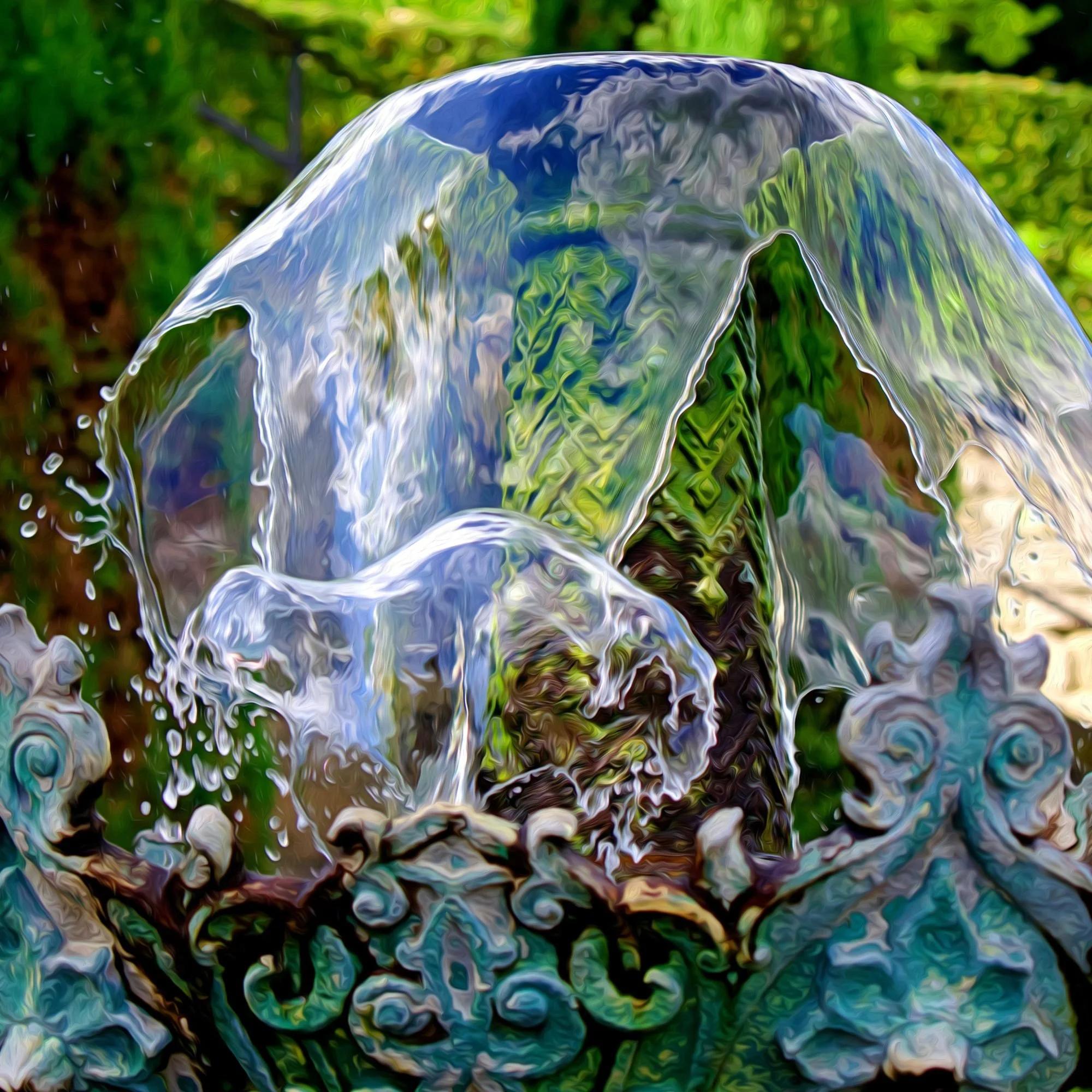
Using Art and Water in Calming Outdoor Spaces
Water and art have long been used in gardens to shape atmosphere, encourage reflection and create a sense of calm. From reflective pools and fountains to carefully placed visual focal points, we can transform a garden into a more immersive and emotionally engaging environment.
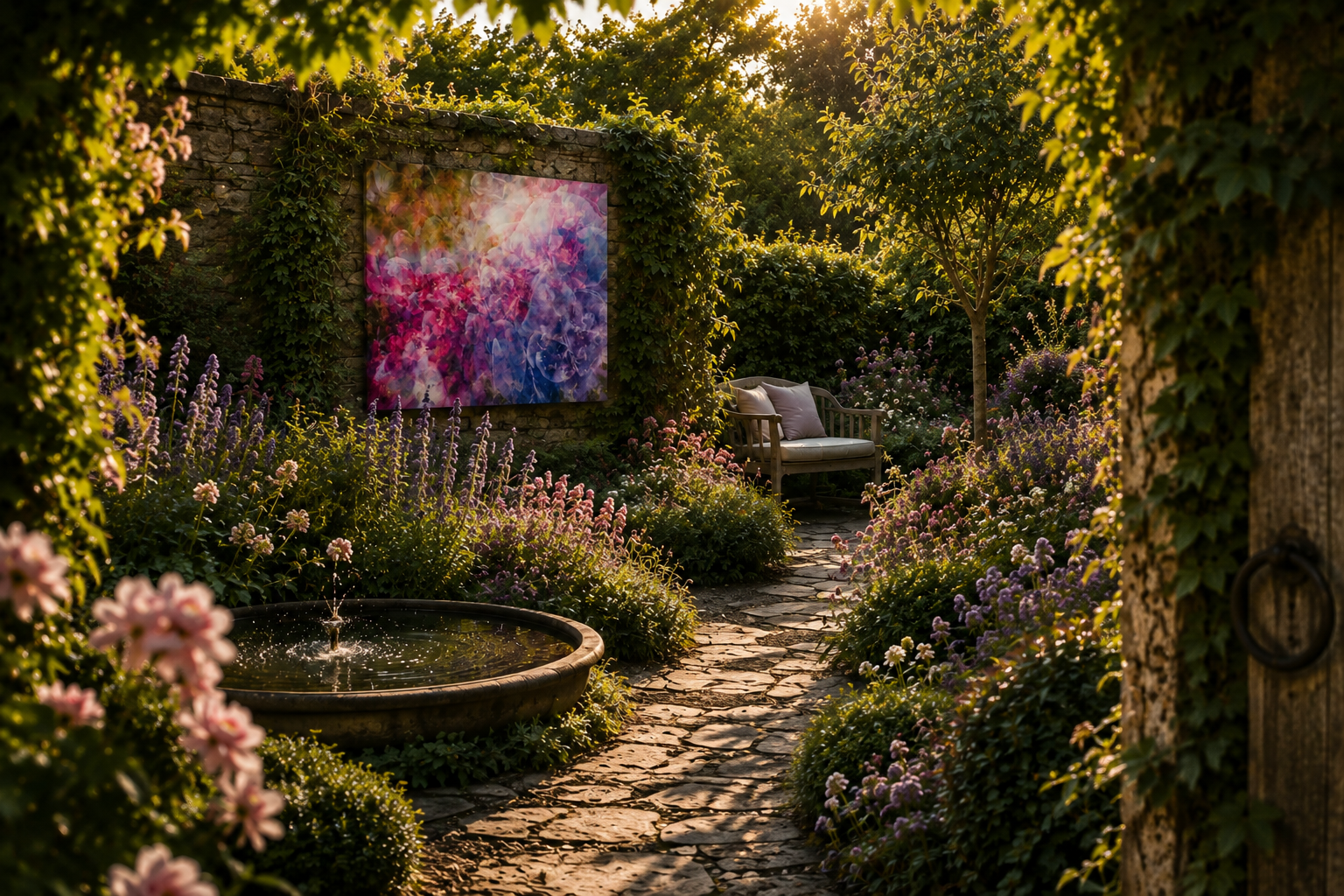
Why Outdoor Spaces Can Feel So Emotional
This connection between gardens and wellbeing is now widely recognised. Gardens connected to hospitals, dementia care, and wellbeing settings are increasingly designed to create feelings of calm and restoration through planting, colour, texture, and carefully considered layouts that shape how we experience the spaces around us.
Experiencing the Garden From Inside the Home
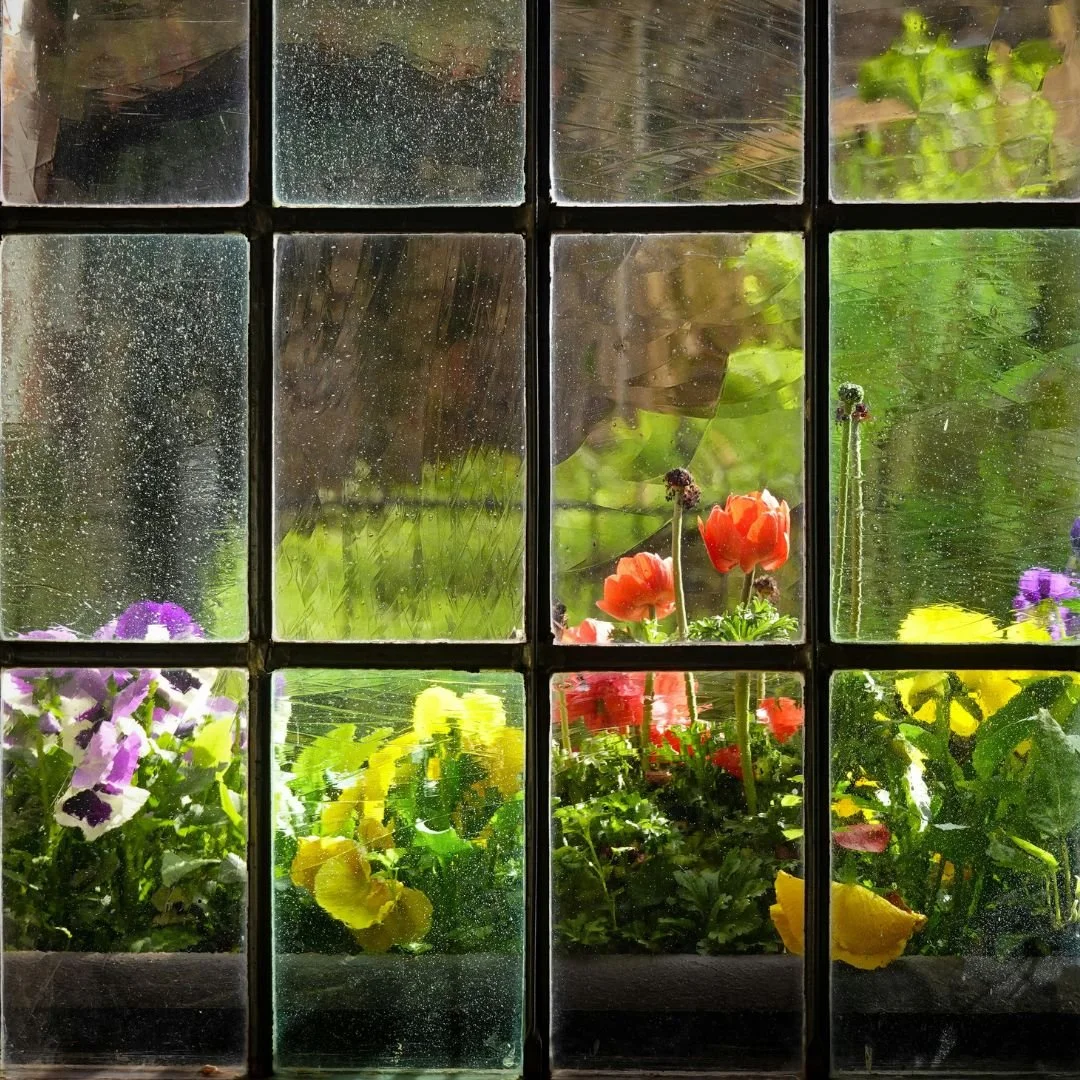
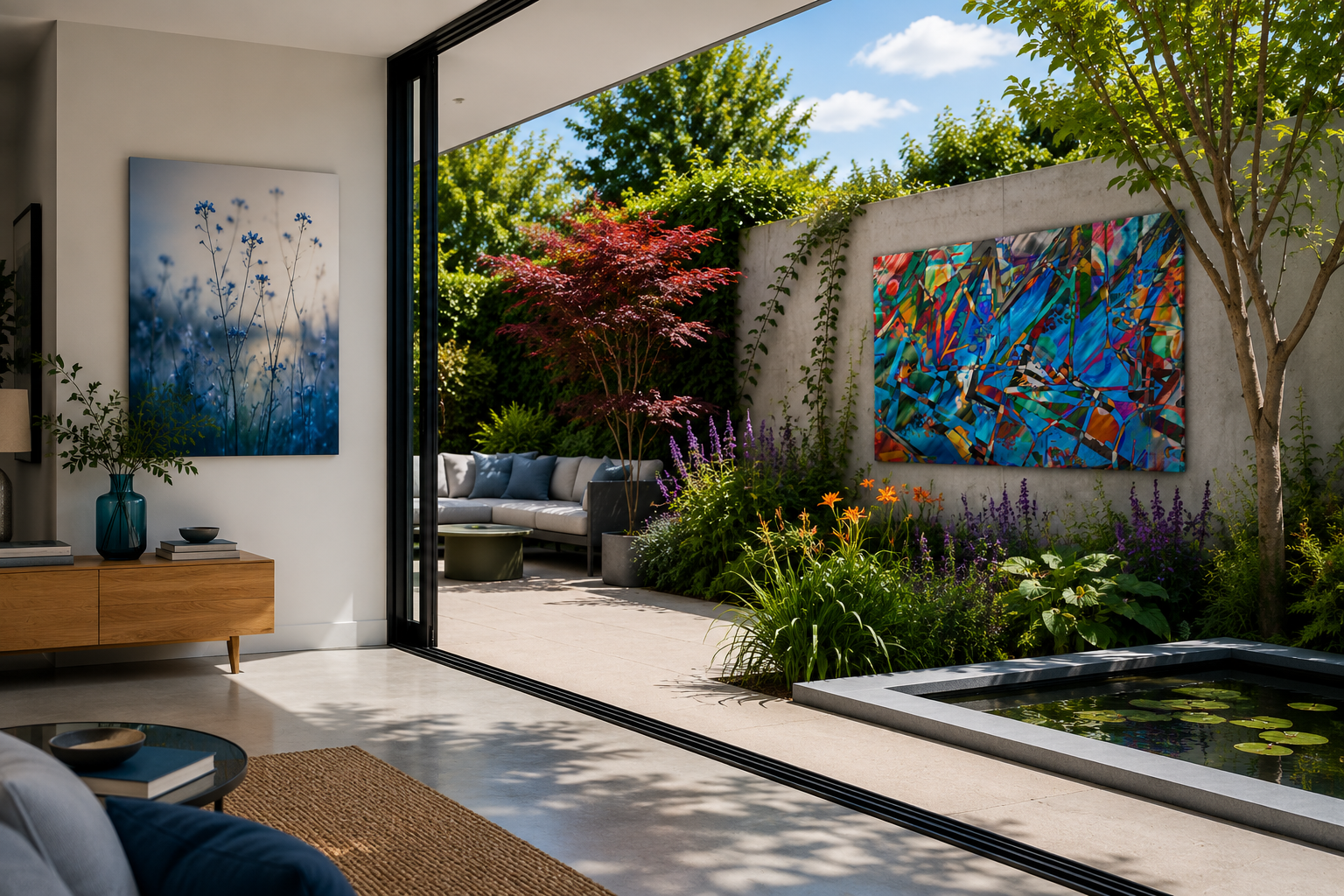
We often experience our gardens not only by walking through them, but through the repeated views we have from inside our homes each day. Carefully positioned focal points and artworks can help strengthen these visual connections — creating a closer relationship between the home and garden itself.
Why Some Gardens Stay With Us
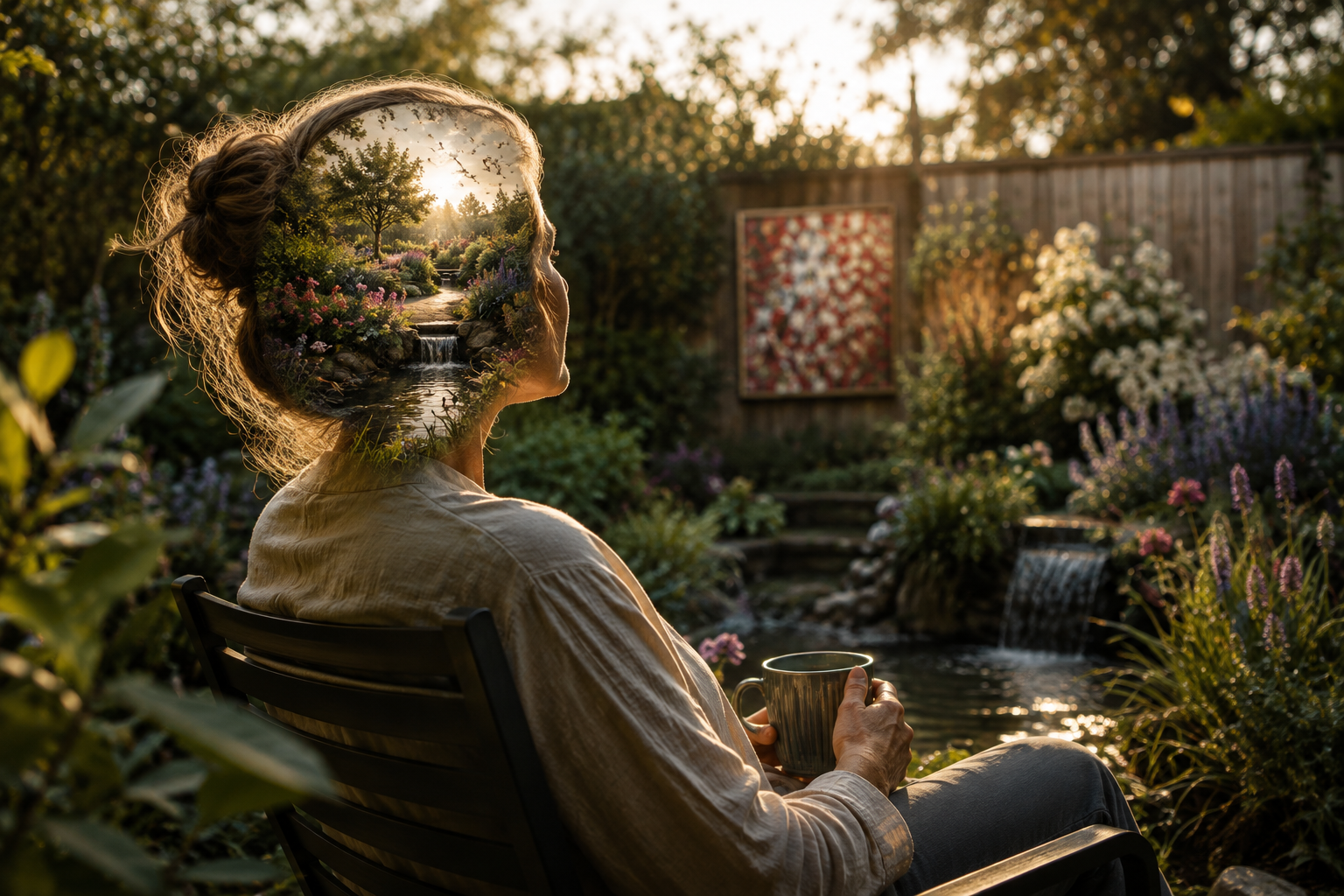
Most of us can remember a garden that stayed with us long after the experience. Often, it is not the biggest or most expensive gardens that leave the strongest impression, but the ones that feel personal, distinctive, and connected to the people who created them.
From Quality Coats to Garden Spaces: Investing Beyond One Season
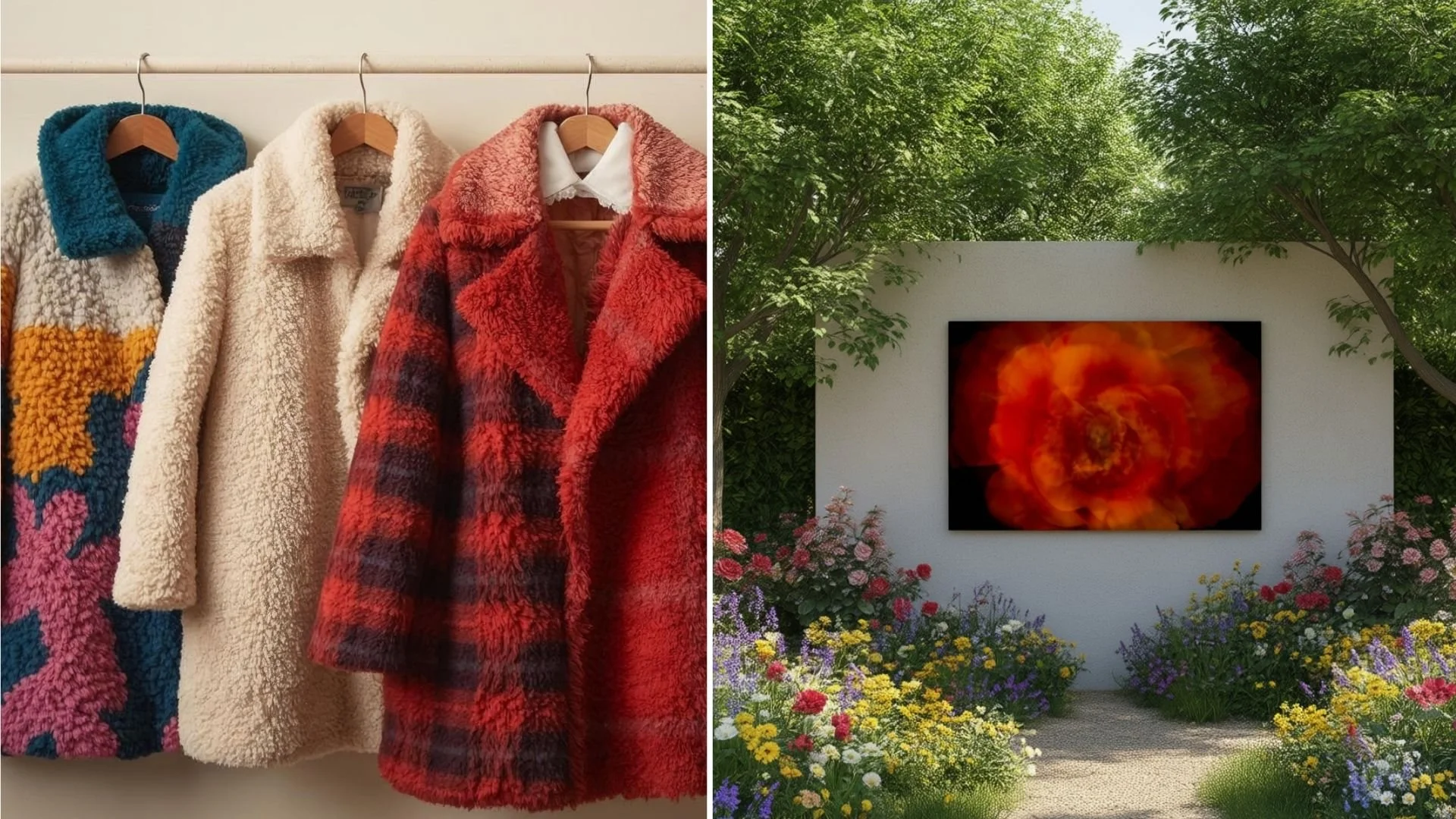
When we invest in furnishing our homes, we often think carefully about quality. A well-made sofa, solid wood furniture, or a quality coat can feel worth the investment because we expect to live with it for years. The same thinking is not always applied outdoors.
Working with Scale in the Garden
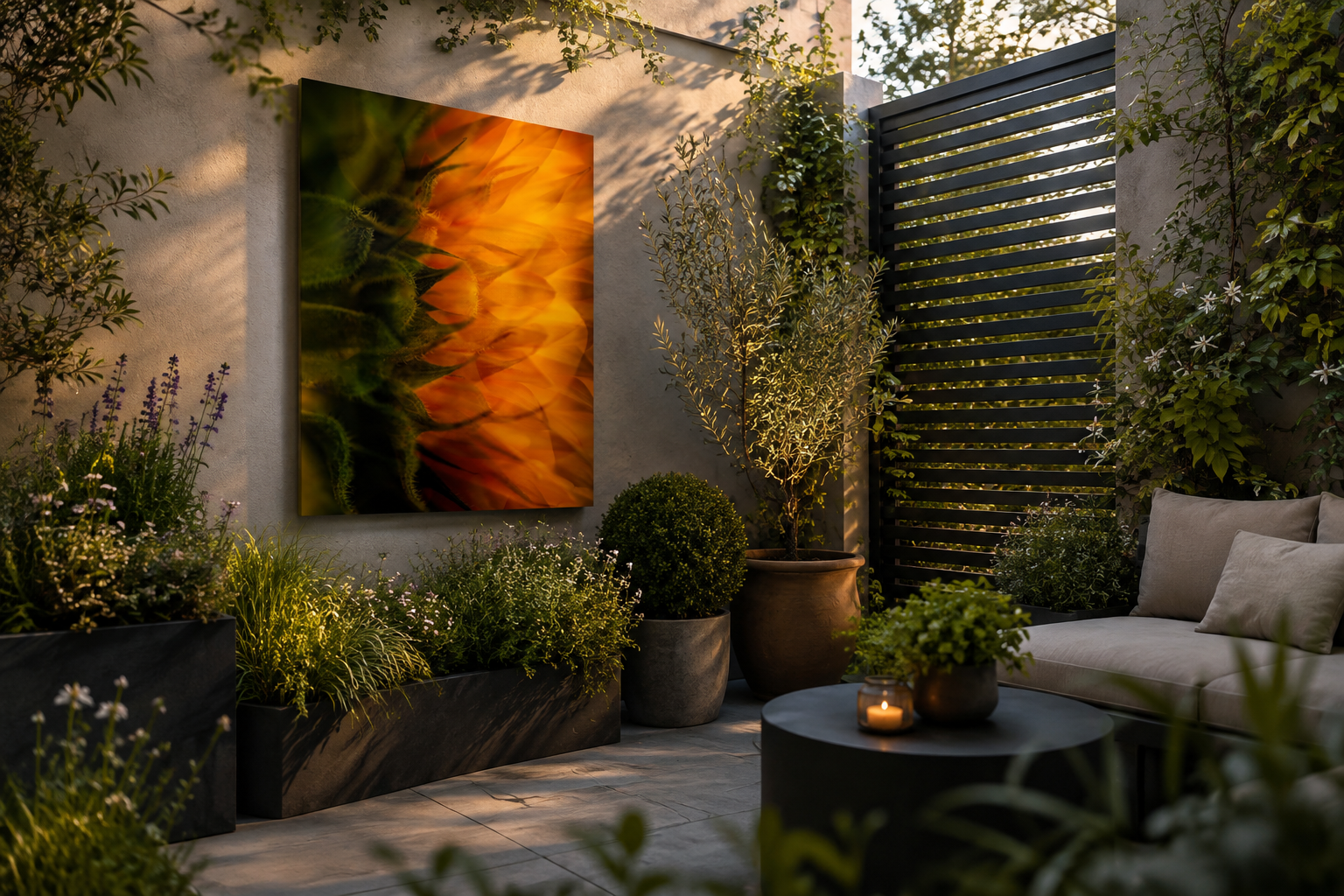
We often judge our gardens by their size, but the spaces we remember most are not always the largest. A small courtyard, terrace, balcony, or compact garden can feel every bit as distinctive and atmospheric as a much bigger space when the elements within it work together well.
Colour Beyond the Flowering Season
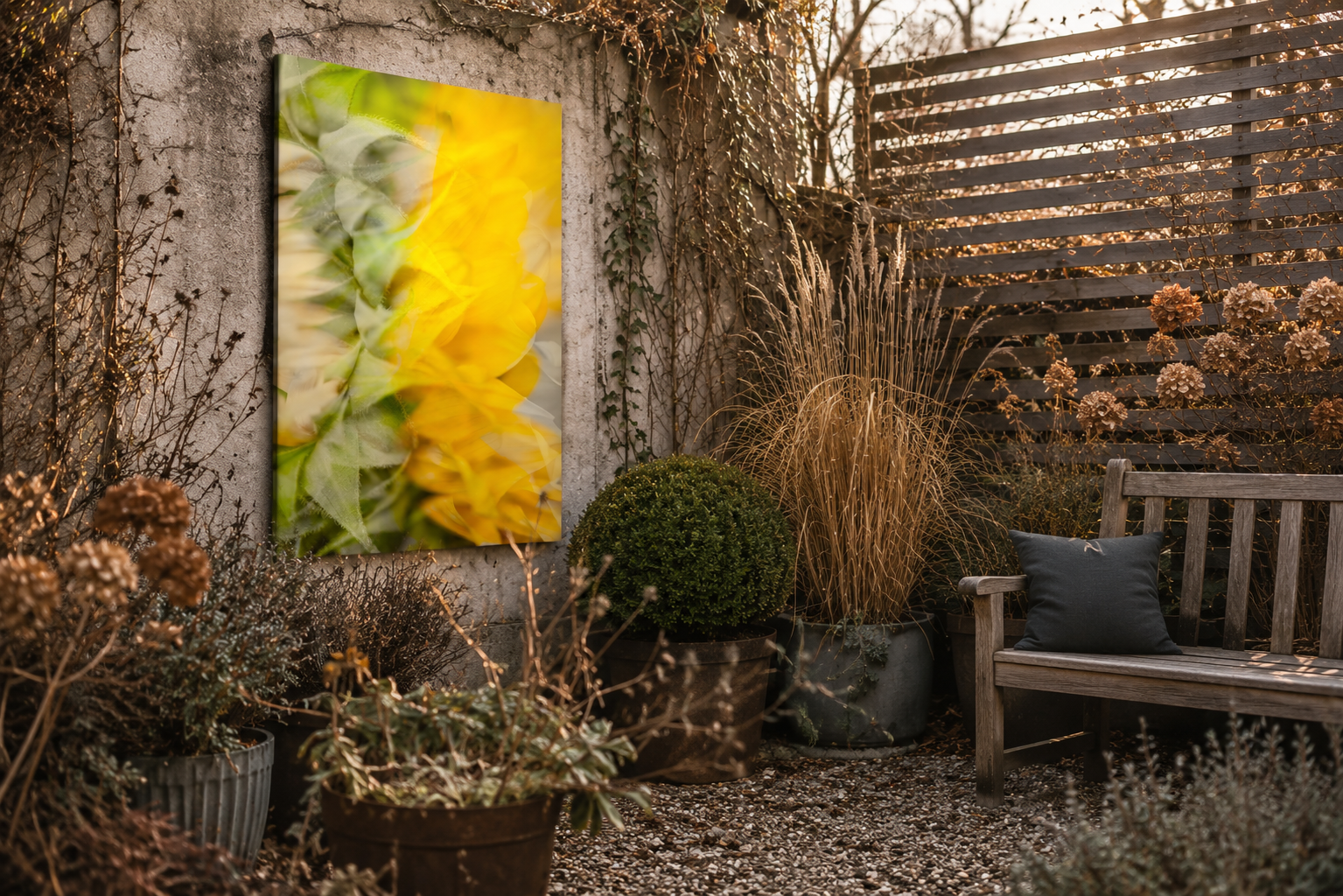
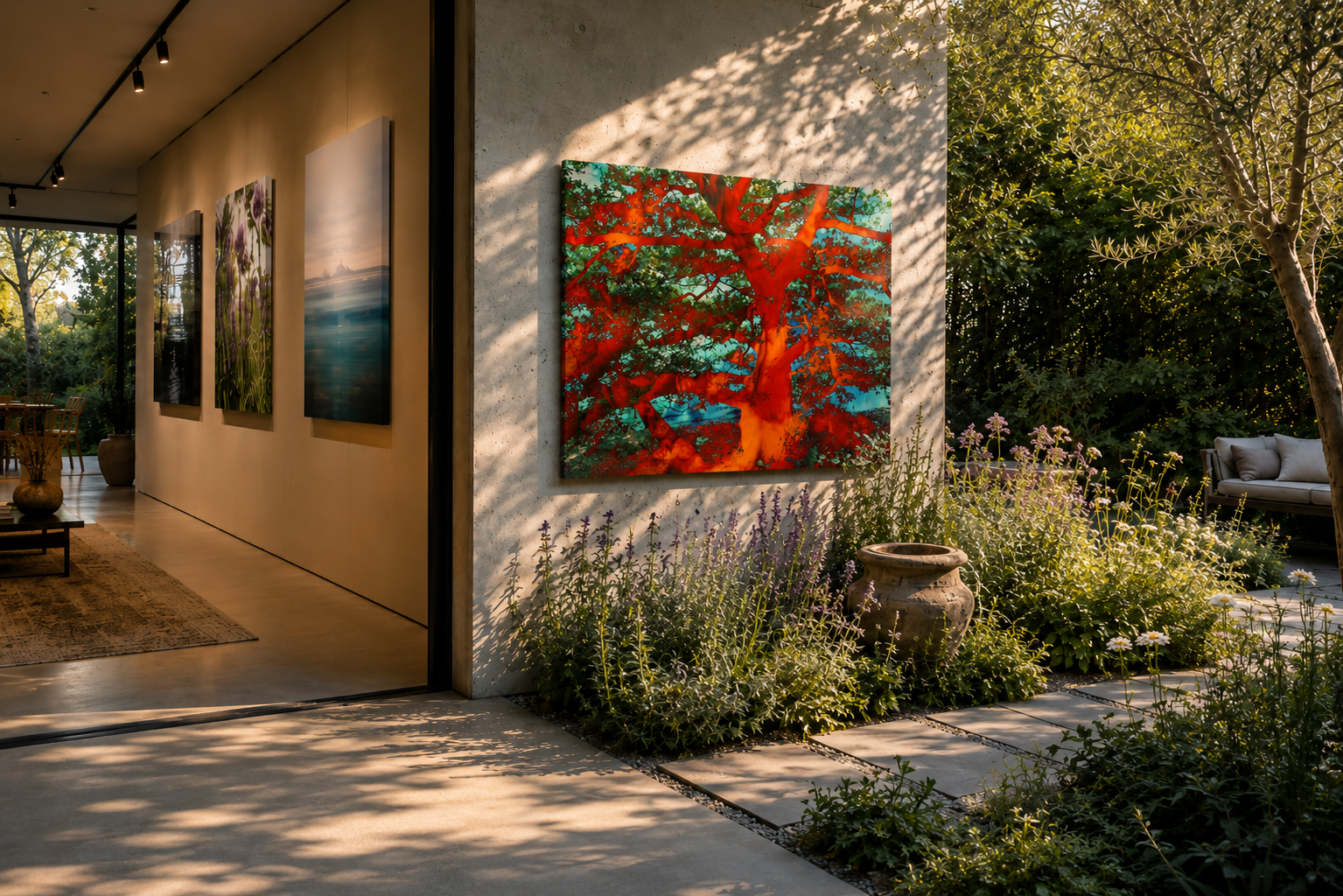
This is where garden art can introduce something different. Unlike planting, the colour within an artwork remains consistent over time. While the surrounding garden changes through the seasons, the image itself continues to provide a stable visual presence within the setting.
The Most Neutral Space in the Home Isn’t Indoors — It’s the Garden
In our homes, we consider materials and layout, but when it comes to visual expression, gardens are often kept more neutral, relying on planting schemes alone to create personality. It’s an interesting contrast. Inside, individuality is expected. Outside, neutrality is often seen as the safer choice. But what might get lost in that decision?
Art In Partnership With Your Garden
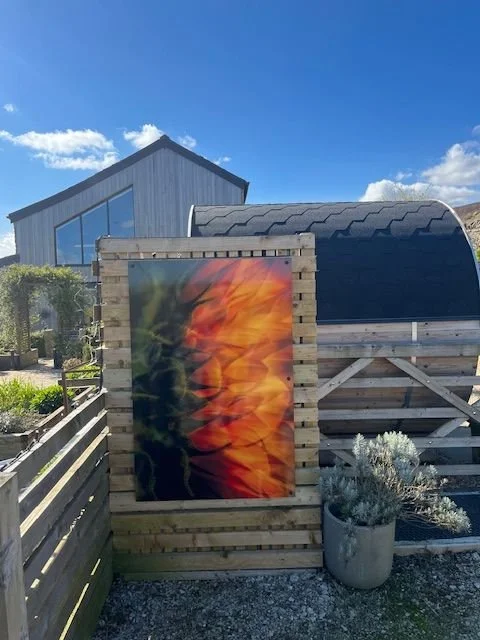
When an artwork is introduced, it becomes part of this environment. It doesn’t replace what is already there or sit apart from it. Instead, it adds another visual layer — something that sits alongside planting, structure and material surfaces.
Photography Outside the Gallery
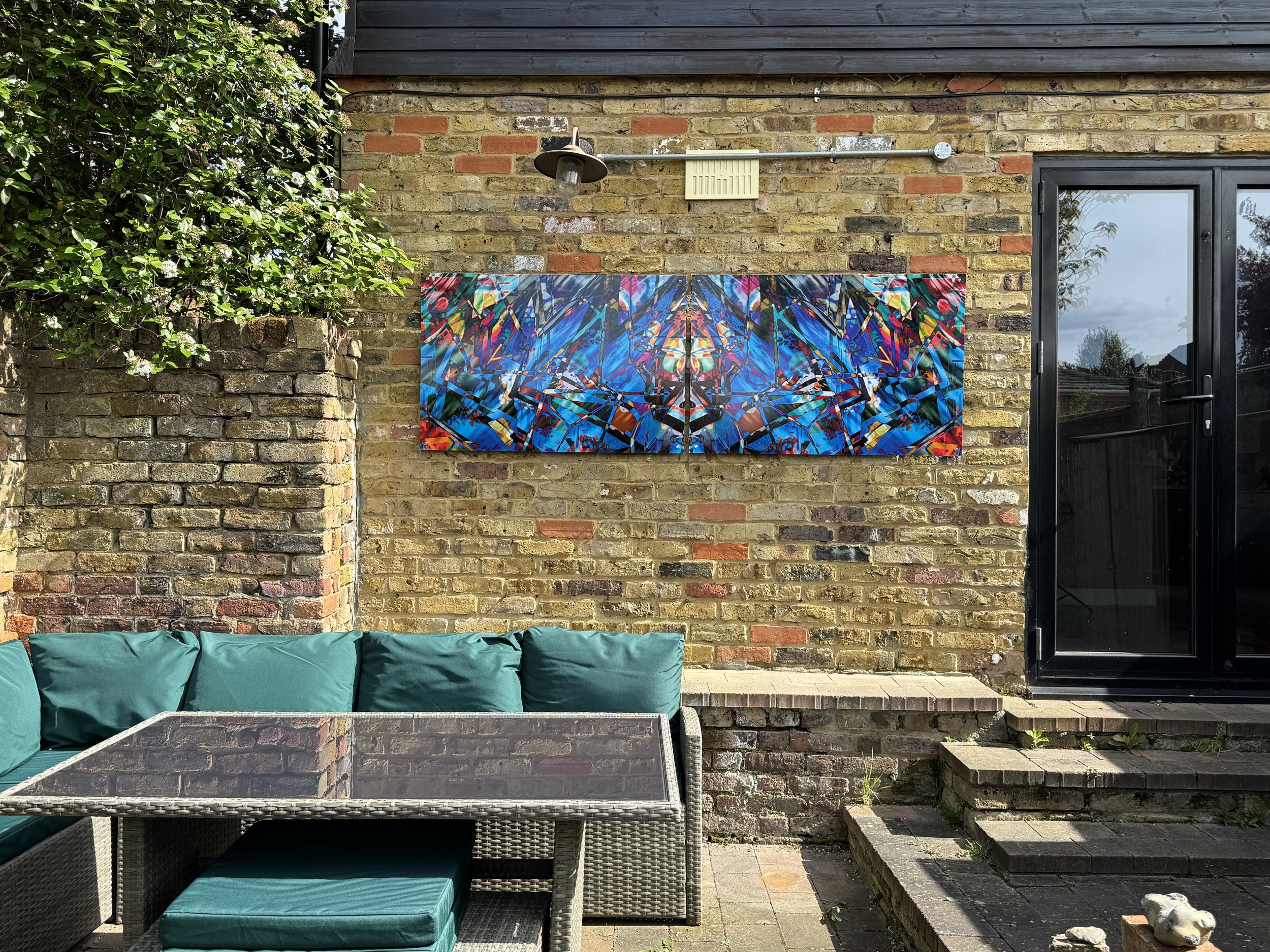
Outside the gallery, photographic works cannot rely on framing or consistent lighting to draw the eye or signal importance. They must coexist within an existing landscape and its daily activity - whilst remaining constant in ever-changing conditions.
The Ambition of Outdoor Art
Gardens already operate at a different pace to interiors. When an artwork image enters a garden setting, it joins the existing rhythm of the garden rather than interrupting it.